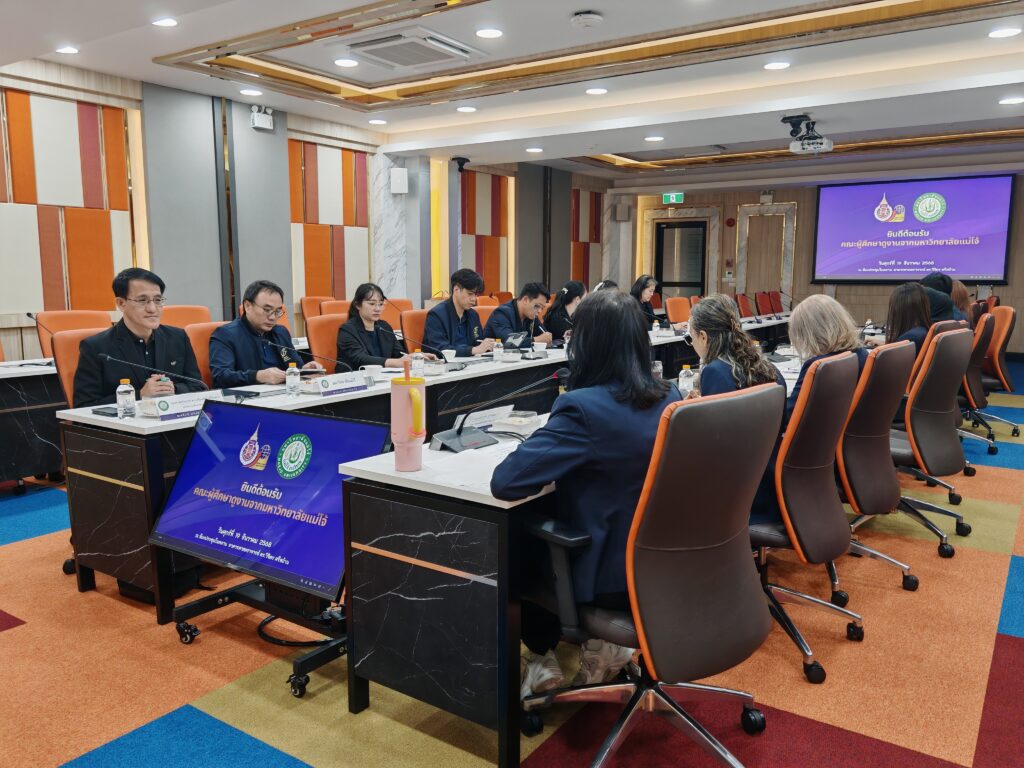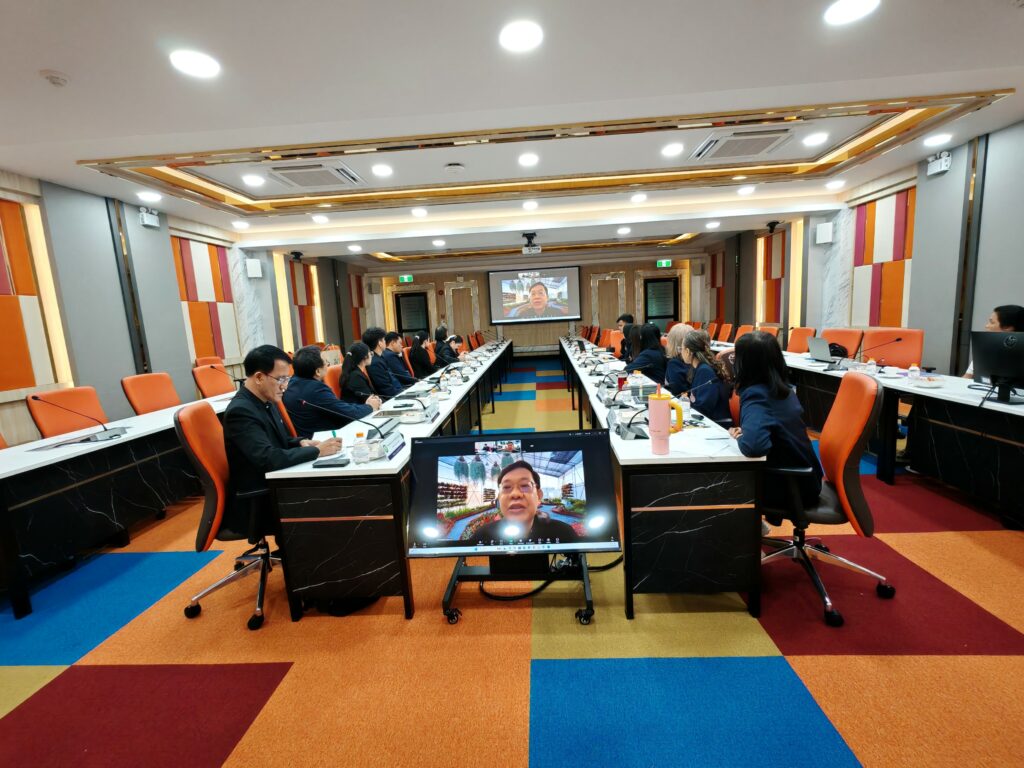
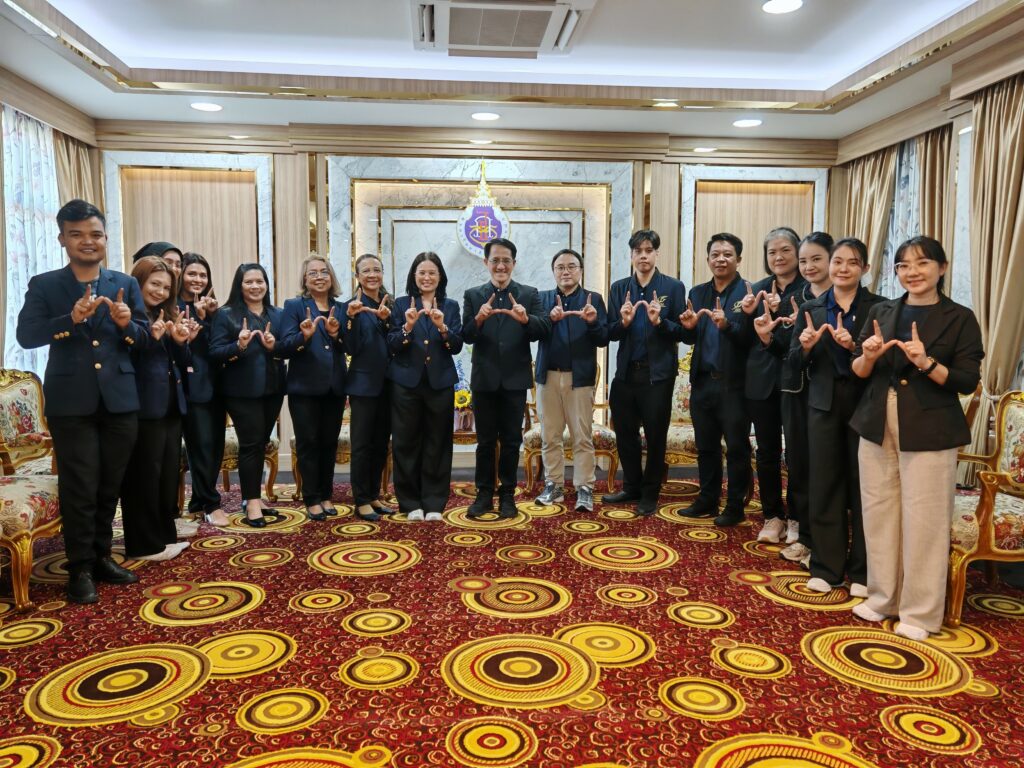
Nakhon Si Thammarat – On December 19, 2026, the Internal Audit Unit of Walailak University, in collaboration with the Integrity and Transparency Assessment (ITA) Steering Committee, welcomed a delegation of 8 executives and staff members from Maejo University. The visit served as a study tour and knowledge-sharing session focused on Walailak University’s strong and concrete ITA operational framework.
Welcoming Remarks and Policy Exchange
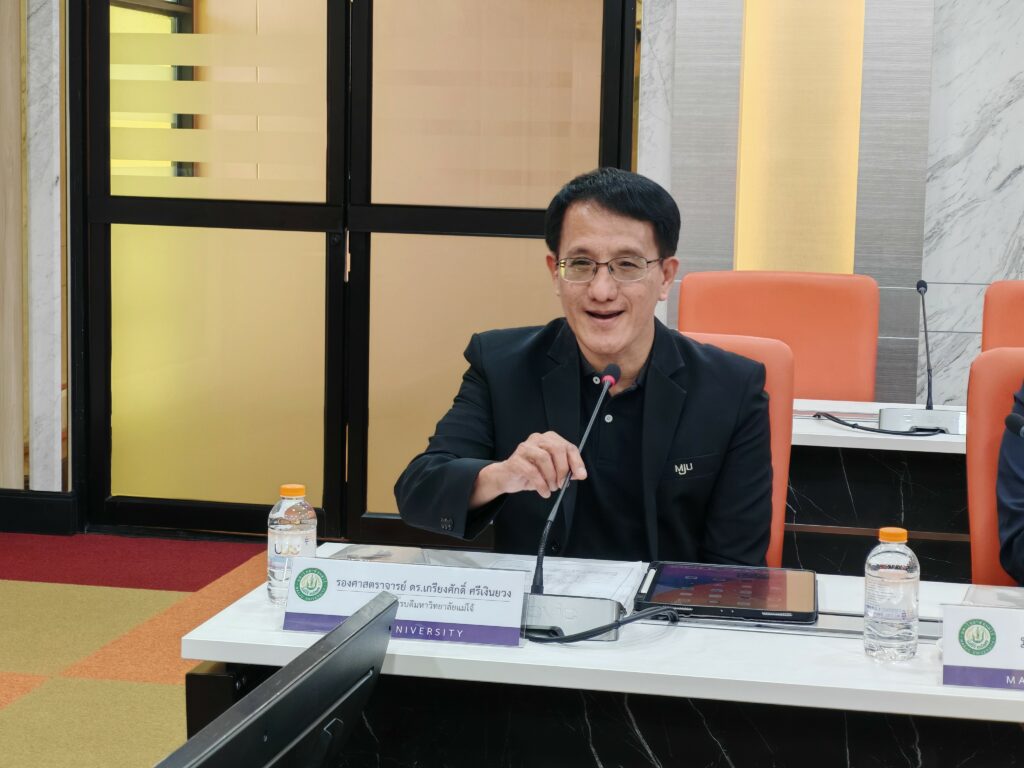
The visiting delegation was led by Assoc. Prof. Dr. Kriangsak Sri-ngernyuang, Vice President of Maejo University. The session was honored by Asst. Prof. Dr. Padungsak Suksa-ard, Vice President for Cooperative Education and General Management and Chairman of the ITA Steering Committee at Walailak University, who delivered opening remarks and presented the university’s ITA drive policy via Zoom Cloud Meeting at the Moklan Room, 3rd floor of the Prof. Dr. Wichit Srisa-an Building.
The Role of Internal Audit Unit in Driving ITA
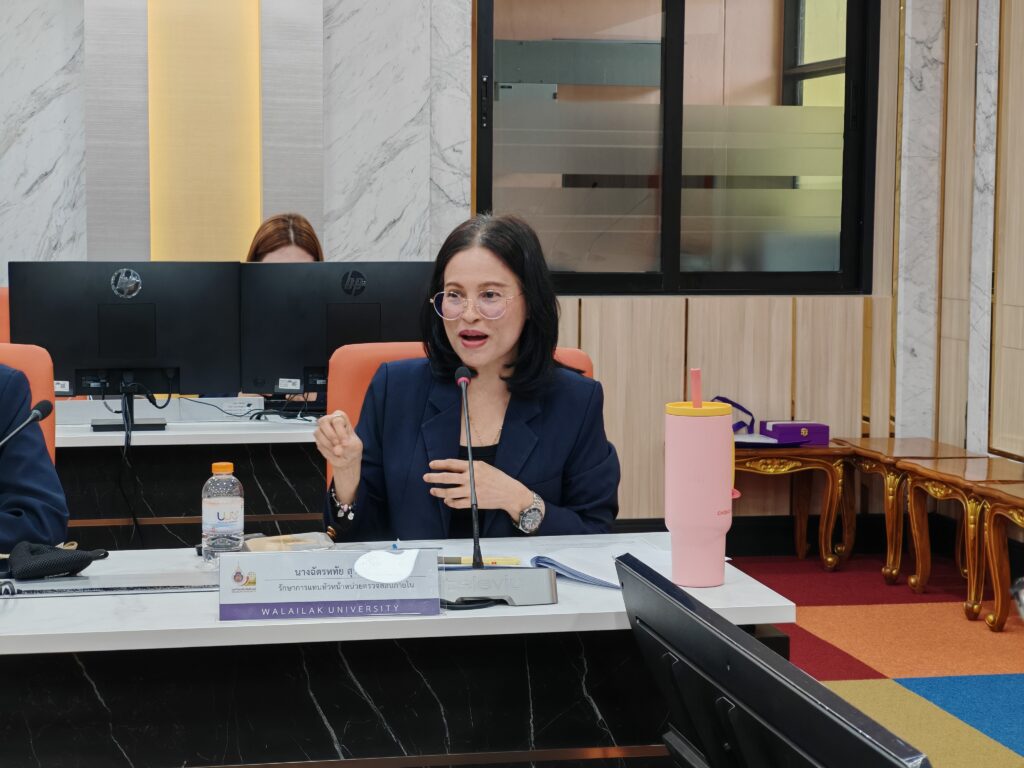
During the exchange session, Ms. Chattrathai Suwanmalai, Acting Head of the Internal Audit Unit, alongside unit personnel, shared key strategies that contributed to Walailak University’s satisfying ITA performance, highlighting four core areas:
Governance Mechanisms: Monitoring operations within the ITA driving team to ensure full alignment with annual evaluation criteria.
Internal Participation (IIT): Strategies to encourage broad participation from internal personnel in the assessment process.
Target Group Selection (EIT): Effective techniques for reaching out to external service recipients and stakeholders.
Problem-Solving & Obstacle Management: Extracting practical lessons from real-world operations to enhance assessment scores and organizational transparency.
Feedback from Visitors
Assoc. Prof. Dr. Kriangsak Sri-ngernyuang praised Walailak University’s operational approach, noting its outstanding success in fostering a culture of transparency—not merely to fulfill the requirements of the National Anti-Corruption Commission (NACC) for points, but to authentic reflect the organization’s true identity. He emphasized the university’s use of “proactive communication” to build genuine understanding across the community rather than enforcing compliance, creating a sustainable approach that leads to authentic evaluation results.
The insights and guidelines gained from this knowledge-sharing session will be applied to formulate Maejo University’s Anti-Corruption Action Plan for Fiscal Year 2026, aiming to further boost operational efficiency and effectiveness in their future ITA implementation.